Click the graphic above to access all our novel studies!!

Tuesday, August 9

Homestead Gardening - What to Preserve Each Month

 Most people think of gardening as a summer activity, and it is, but to be truly productive, you'll want to learn about year-round gardening and preserving.  You've heard of buying 'in season,' but now it's time to learn how to preserve your own harvest with the seasons!

If you're new to the world of canning and food preservation, start here with the basics.    You'll want to invest in a good canning system, canning utensils, and possibly a pressure canner, too.  It should be noted that InstaPots are NOT advised for pressure canning.


Remember that the months may vary a bit based on your latitude and hemisphere.

January

Dried beans are a meat-free protein that have a long storage life, which means you can always have them on hand.  When you first shuck the beans, allow them to dry thoroughly.  I like to throw all of them in the dehydrator (on one of the fruit leather sheets, to keep from slipping through the holes) overnight to make sure they are good and dried.  You don't want to open your jars down the line and find a moldy mess!  Once they are dried, if you store them properly, they should be good for several years in your pantry.  Bear in mind that the longer they sit on the shelf, the longer they will take to cook later.  To keep dried beans as fresh as possible, store them in food-safe storage containers with tight-fitting lids.  Store in a cool, dry place out of direct sunlight.  (Cooking tip: If beans have been sitting on the shelf for more than a year, add ¼ tsp of baking soda to each pound of beans, when you cook them, to soften them.)

February
Having meats pre-cooked is a big draw for busy moms, but they get expensive at the store.  Look for locally-raised meats, and try to put up a variety.  Meats vary in how they need to be preserved, but generally cooking them and pressure canning will cut down on a good deal of time.  Here's a great post to help you learn to can just about any meat.  By having the meat pre-prepped, you can toss it in with some rice, quinoa, or pasta, and canned veggies for a quick warm up on the stove.

March
If you want to have the soups completely made and ready-to-eat, you'll definitely need a pressure canner to safely preserve them.  When you're canning the soup, just put in the basic ingredients - you can add a thickener when you cook it.  The same goes for grains - they will need to be added at the time of heating.  You'll just want the meat, vegetables, and broth.  You can also preserve basic broth this way, with nothing else in it.  It can be added to any casserole, soup, sauce or even just a basic rice pot for added protein.  Check out the Ball Complete Book of Home Preserving for individual pressure canning times and temperatures.

April
Planted in the fall, root vegetables have had time to size up and are ready to be harvested and preserved.  Carrots and beets may be fresh, while potatoes will most likely be the leftovers of last year's crop, so check for firmness.  This is a more advanced project that will require a pressure canner.  Here are detailed instructions for each of the different root vegetables to ensure success!

May
Herbs can easily be dried and preserved for use cooking throughout the year.  This is a good project to do with children, and is the natural extension of starting an herb garden.  If you want to turn herbs into a science unit study, check out Teaching Kids About Herbs.  In this year-long course, you'll learn about many herbs!  Each month, your child will learn about a new herb and how to use it.

June
Jams and preserves are one of the easiest things to preserve, and they are a yummy way to experience summer in the dead of winter.  Most berries are highly perishable, so making jam is the perfect form of preservation.  Jam is made with mashed fruit, while preserves have whole berries and pieces of fruit in them.  Beginners will be happy to hear that you can make these with three ingredients (berries, pectin, and sugar), and they don't have to be pressure canned.  Here's a quick video tutorial.

July
Cucumbers can be...overwhelming.  So much so that one year I actually cheered when the pig tore up the vines because we still had tons of pickles leftover from the year before!  Pickles are about the easiest thing to can, and what I generally recommend beginners start on.  There are several different varieties to play around with, and you can also try out chow-chow and relish.  Vinegar, pickling spices, and cucumbers -- easy peasy!

August
Tomatoes...if you grow them then you know that once they begin appearing on the vine, they start coming in fast and furious.  It can feel like you're drowning in tomatoes at times!  Some canned tomatoes can be water bathed, while others need to be pressurized.  Be sure to check the Ball Complete Book of Home Preserving for specific information on what you want to use them to make.  We make a lot of spaghetti sauce and salsa because those two items compliment our meal preferences.  We also like to dehydrate cherry tomatoes to use as salad toppers.  If you're feeling adventurous, go for a gourmet catsup or barbecue sauce!

September
If you have beehives, or access to a local apiary, then you know there's nothing quite like wild honey.  It's a cure-all and notable for it's amazing ability to help with seasonal allergies.  Honey will last several years if properly stored.  You will want to put it in an airtight container kept in a cool, dark place.  It's a little trickier to store the honey with the honeycomb in it because sometimes it has moisture content you may be unaware of, and that affects the storage.  The honeycomb may also cause your honey to crystallize faster.  However, the honeycomb is excellent!  If you want to store comb in your honey, read more here.

October
Fall is a fantastic time to pick up bulk boxes of apples, and to make your house smell heavenly with the smell of them turning into applesauce and apple butter.  Both of these can be water bath canned and are good for beginners.  Apple pie filling is a little more complicated, but can also be water bathed and is perfect for a quick and easy dessert.  You can use the core and peelings, too, to make apple cider vinegar!

November
Pumpkin is my favorite fruit, and "pumpkin spice season" my favorite time of year!  Each year, we plant several pumpkins and use them throughout the year in pies, pumpkin breads, and even in cookies.  It's also pretty low-maintenance.  You can keep it on the pantry floor at room temperature, and it will last several months.  However, it requires a bit more for processing as it's not safe to can pureed pumpkin, so we typically roast the pumpkins in the oven, scoop the puree, and freeze it in quart sized bags.  If you absolutely must can your pumpkin (no freezer space), please follow these instructions and be safe.

December
After Thanksgiving, you can usually pick up fresh cranberries at a decent price.  Most of us don't live near cranberry bogs, but if you do, grab some local ones.  You can preserve cranberries in small batches for condiments, smoothie mixes, and even your holiday side dishes.  These can be frozen or canned.  Our favorite thing to do with these is make cranberry juice!


You may also be interested in....


Pick up the Homemaking & Homesteading Bundle in our Cottage Shoppe!  

The bundle includes twenty-four tutorials with background information for anyone who is interested in homemaking and homesteading. Topics are broken down into:
  • In the Kitchen – Fall & Winter
  • In the Kitchen – Spring & Summer
  • Around the Homestead – Inside
  • Around the Homestead – Outside
For more great homesteading fun, check out the Homesteading Course at SchoolhouseTeachers!

This homeschool homesteading course is designed for anyone who has a desire to live more independently and prepare much of what is needed each day using their own hands. In this elective course, the student can learn how to work for what they want by making it themselves, instead of participating in an “on demand” society. Homeschool students of all ages learn patience, along with the skills needed to make their own cleaners for the home, sunscreen, homemade ketchup and dry mixes, as well as how to choose animals and prepare for emergencies, and much more. Learning the patience and usefulness of “doing it yourself” can be immensely helpful not only in the sense of living a healthier life, but also for the budget!

Wednesday, August 3

Best Kid's Books about Survival

Recently, there has been a rise in the popularity of survival-based books for children.  Our boys were definitely drawn to these more rough and tumble types of books, but they're not just for boys.  Here are some of our favorite survival books for youth...


Why read survival books?  

Where these life skills were once a part of everyday life, kids today have to be taught survival skills, and you know that we love teaching through literature!  We prefer the classic survival stories, but dystopian literature has its place, too, in teaching these skills.

What skills?

Emergency preparedness, cooking, woodcarving, gardening, camping, first aid...I feel like I'm listing Boy Scout badges here, but these are all life skills that kids need to learn.  We've also selected books for herbal remedies and outdoor cooking.

What survival books would you add to this list?


For more literature resources, check out SchoolhouseTeachers! It includes all classes, for all grades…and it’s one price for the entire family. There are many different learning styles to select from, so if you have one visual kid who needs a relaxed pace and one aural kid who needs a more stringent pace, there are classes that will fit them each. With over 475 classes available, plus extras for mom and dad, this is my favorite resource to offer new families wanting to dip their toe into homeschooling! 

You may also like…


Hands-On Learning

For hands-on learning, we also recommend the Craftsman Crate.  These subscription boxes aren't your run-of-the-mill 'read a bit, do a bit' projects.  They are in-depth, hands-on experiences.  Since the subscription's inception, we've done wood burning, wood carving, calligraphy, and metal working.  This month, however - as you'll see in the unboxing - got the "Coolest Kit Ever!" award.  The boxes are designed to teach artisan skills, such as those your grandfather or great-grandfather would have learned, and it's one of the best boxes for teens currently out there.


You may also like....

Monday, August 1

9th & 12th Grade Curriculum Reveal

It's that time of the year again! Maybe it's because I'm a TK (Teacher's Kid), or maybe it's just because I'm weird....but the back-to-school sales and smell of new books always make me happy. This year, we've got two high schoolers...the house is full of hormones happiness....


Morning Basket (Together Time)

Since as far back as we can remember (which is to say, since the first kid was born), we've started our days with a little bit of reading together time. Now that they're teens, I see no reason to stop this tradition. We just change the book selections!

Seriously though, your teen might grumble that it's not cool to read together with his little siblings and his mom, but inside, he's truly loving it. Here lately, I've been reading aloud while the boys eat breakfast.  They're teens, and they're sleeping in later than usual, so this is a gentle way to start the day.  

And can we just step back for a moment and reflect on the blessing that homeschool affords us with that flexibility to sleep in?  So many teens have to stumble through their early morning classes before their brains, biologically, are even capable of fully functioning.  I like knowing that that extra hour or two gets them good sleep, boosting their immunity and helping them to start the day off right!

Morning Basket Read-Alouds

These are the books we'll be reading aloud together this year.  With it being the senior year for one, we are revisiting some of our favorite read-alouds from our early years of homeschooling...

Once this time is done (usually a couple of chapters), we have a quick rundown of the day. Sometimes this is a quick once-over of their daily assignments. Other times, it's a reminder that we have appointments or a field trip or something special going on.

Ninth Grade Curriculum

As our youngest enters high school, it's natural to step back and reflect upon all the years we've been homeschooling...it's the end of an era.  No more littles or even middle schoolers.  This is our special needs baby, and it's been quite an accomplishment - from him, from us, and from our helpers - to see him standing on the precipice of this moment!  

This year, he'll be enrolled at Sparks Academy, which will be fantastic for that peer interaction component, in the following classes:

Here in the home, he'll be working through:


Twelfth Grade Curriculum

The vast majority of this senior year will be completed through dual enrollment classes at a nearby college.  It may seem like a heavy load, but you  have to remember that this is our history kiddo.  For the history and geography courses, they are classes he's just required to take to move forward.  His DE schedule (over two semesters) includes:

  • World History 1
  • World History 2
  • Calculus
  • Introduction to Engineering
  • Design Principles
  • Physical Geography w/ Lab

At home, he'll be completing:

He'll also be completing CLEP tests for Psychology and Western Civilization 1 & 2.  Some of these he has been working on over the summer between junior and senior years.  

WHY is he doing so much classwork?  Well, once he has completed his senior year, he will be only seven credits shy of an Associate's Degree.  Being able to graduate high school having nearly completed that two-year degree is huge!  It will help him financially, too, as he moves forward with his career path, possibly transferring into a four-year school.  Like so many teens, he has struggled with the decisions of what his future brings...an age-old issue made more complicated recently by the pandemic and state of the union.

Naturally, there's sure to be some adjustments throughout the year.  We're hoping to supplement our studies with a few nice, long roadschooling trips as well!  Here's to a fantastic new year!


Looking for a different grade?  Check out our preview curricula reveals!

This is part of our series - Five Days of Homeschooling Teens.  Read the whole series...

Tuesday, July 26

The Button Box & the Early Islamic Empires

 "It helps to remember those who hurt and betray as numerous and deep as the sands outside holy Mecca.  And like the sands, they are beneath us - though they may burns the soles of our feet.  The burning serves as a reminder to travel as quickly and light over these threats as possible on the way to our blessed destination.  Do not let enemies, or the foolish, distract or dissuade you.  Keep your eyes on the right path." ~The Button Box


A Bit of Islamic History

Islam is the third of the major monotheistic faiths, meaning those whose followers believe in one God.  Judaism, Christianity, and Islam all trace their origins to the teachings of prophets who received revelations passed down as holy scriptures.

Based on the teachings of the Qur’an, the holy scripture of Islam, Muslims trace the origins of their faith to the first prophet, Adam.
  Though it was said that God had revealed himself to Adam, Islamic belief is that no one has seen God, not even Prophet Muhammad.  The Qur’an teaches that God repeatedly sent prophets to humankind with the same basic message of belief in One God and of the necessity to worship and act according to strong moral standards.  This religion teaches that earlier scriptures were sometimes lost or altered, or were superseded by later revelation.  Therefore, Muhammad, the final prophet, completed God’s message to humankind.

The Prophet Muhammad is said to have been a man born about 570 CE in the city of Mecca, a caravan stop on a trade route that ran along the western side of the Arabian Peninsula between Yemen and the Mediterranean region.  Orphaned at an early age, Muhammad spent his youth in the care of his socially prominent grandfather and uncle.  He worked as a caravan trader, which led to his marriage to the wealthy widow Khadijah.  He was known for wisdom and honesty.  

At about the age of forty, after years of spiritual searching and meditation, he reported receiving a revelation through the Angel Gabriel in a mountain cave outside the city.  These revelations continued for the following twelve years, between about 610 and 622 CE.  The revelations were transmitted by Muhammad to his followers in Arabic, and they were memorized and committed to writing during his lifetime.  These words were known as the Qur’an. Muslims believe this text to be the direct word of God, whose name in Arabic is Allah.

The word Islam means “peace through submission to God.”  The Qur’an teaches that all prophets were Muslim in the sense that they were models of submission to God and seekers of truth.  Islamic teachings lay out a way of life based on moral values and commandments.

The Five Pillars of Islam are:
  • To testify to belief in One God and the prophethood of Muhammad
  • To pray five obligatory prayers each day
  • To fast from dawn to sunset annually during the month of Ramadan
  • To pay annual obligatory charity
  • To make the pilgrimage to the city of Mecca at least once in a lifetime

A Bit of Umayyad History

The Umayyad dynasty was the first great Muslim dynasty to rule the Arab kingdom. Before the Umayyads, Islamic rule was non-centralized. The Umayyads, headed by Abū Sufyān, were a largely merchant family and were centered at Mecca. In the first Muslim civil war, there was a struggle for the caliphate role, with a murder of the third caliph and then the emergence of Muʿāwiyah, then governor of Syria, as the first Umayyad caliph.

Umayyad rule was divided between two branches of the family: the Sufyānids (reigned 661–684) and the Marwanids (reigned 684–750). The Sufyānids centralized authority in Damascus, and the Syrian army became the basis of their strength. Muslim rule expanded to Khorāsān, garrison cities were founded as bases for expeditions into Central Asia and northwestern India, and the invasion of northwestern Africa was begun. They also conducted campaigns against Constantinople (Istanbul), which were directed against the Christians. Civil war brought Sufyānid rule to an end in the year 684.

Under ʿAbd al-Malik - of the Marwanid line - the Umayyad caliphate continued to expand. Muslim armies continued to invade India and Central Asia. Arabic became the official state language, Arabs replaced Persian and Greek officials, and new Arabic coins replaced the former money system. Communications improved with the introduction of a regular post service from Damascus to the provincial capitals, and architecture flourished during this time.

Decline began in the year 717 with the disastrous defeat of the Syrian army by the Byzantine emperor Leo III. New financial and political reforms placed all Muslims on the same footing, regardless of ethnicity, and this led to financial crisis and feuds between southern (Kalb) and northern (Qays) Arab tribes. Eventually, with the dilution of their armies from expansion on so many different fronts (France, Anatolia, Central Asia, and North Africa), the Umayyad dynasty came to an end.

The last Umayyad, Marwān II (reigned 744–750), was defeated at the Battle of the Great Zab River. Members of the Umayyad house were hunted down and killed, but one of the survivors, ʿAbd al-Raḥmān, escaped and established himself as a Muslim ruler in Spain, founding the dynasty of the Umayyads in Córdoba......this story is where we find ourselves in 'The Button Box.'

A Bit of Abbasid History

The Abbasid caliphate overthrew the Umayyad caliphate in 750 CE, and reigned until it was destroyed by the Mongol invasion in 1258.  Their leadership was also based on dynasty, but their social hierarchy had a more inclusive government, and it was located in the capital city of Baghdad. The distinction between Arab Muslims and non-Arab Muslims diminished, with Persian culture exerting a greater influence than religion.

The Abbasids promoted commerce, industry, arts, and science.  During their rule, Islamic art and culture flourished, and this was the beginning of the 'golden age.' They are famous for inaugurating the Islamic golden age. Religious scholars developed systems of law, and many people converted to Islam, for a variety of reasons, one of which was because there were heavy taxes levied on NON-Muslims. 

Instead of focusing on North Africa, the Mediterranean, and southern Europe (like the previous empire), the caliphate turned eastward.  With the rise of the Abbasids, the base for influence in the empire became international, emphasizing membership in the community of believers rather than Arab nationality.  Spanning over four thousand miles, the Abbasid empire was impressive but difficult to maintain.  As people converted to Islam, tax revenue collected from non-Muslim subjects dwindled.

A Bit of Fatimid History

The Fatimid dynasty tried unsuccessfully to oust the Abbasid caliphs as leaders of the Islamic world.  This group took its name from Fāṭimah, daughter of the Prophet Muhammad, from whom the Fatimids claimed descent.  They were a rival religious movement—the Shiʿi branch of Islam—and dedicated to the overthrow of the existing religious and political order in all of Islam.  They were, in the eyes of their followers, the rightful caliphs, both by descent and by divine choice the legitimate heads of the universal Islamic state and community. 

For more than a century, the Fatimid rulers pursued their goals.  At times they were compelled to reach some agreement with their Sunni rivals, because of things like war on the frontiers, trouble in the Mediterranean, unrest at home or in the provinces, but such arrangements were always temporary.  The caliph was not only an emperor: he was also an imām—the spiritual head and embodiment of God’s infallible guidance to humankind.  In the Fatimid state, religion became a third branch of the government, together with the traditional military and leadership establishments, as an institutionalized state religion.

One reason the dynasty began to decline was their adoption of a religious doctrine that was unacceptable to the Sunni majority.  Then, the coming of the Crusaders indirectly sealed its fate, for in the great 12th-century contest between Islam and Christendom, there was no room for dissension on the Muslim side.  The end of this dynasty came in 1171 when the last caliph died.  Saladin became the real master of Egypt, and the Fatimid caliphate was formally abolished.


Read
  • The Button Box
    • After Jewish fifth-grader Ava and her Muslim best friend Nadeem are called hateful names at school, Ava's Granny Buena rummages in her closet and pulls out a glittering crystal button box. It's packed with buttons that generations of Ava's Sephardic ancestors have cherished. With the help of Granny's mysterious cat Sheba, Ava and Nadeem discover that a button from the button box will take them back in time. Suddenly, they are in ancient Morocco, where Nadeem's ancestor, Prince Abdur Rahman, is running for his life. Can Ava and Nadeem help the prince escape to Spain and fulfill his destiny, creating a legendary Golden Age for Muslims, Jews and Christians?
  • Rayan's Adventure Learning the Five Pillars of Islam
  • Umayyad, Abbasid and Ottoman Caliphates

Watch

Make / Do

Vocabulary
  • caliph
  • caliphate
  • Mecca
  • Mohammed
  • Quran
  • Shia
  • Sunni
  • mosque
Think
  • Besides conquest by armies, how was Islam spread?
  • Which of the aforementioned empires treated its non-Muslims subjects most fairly?  Why did you choose this one?

Monday, July 25

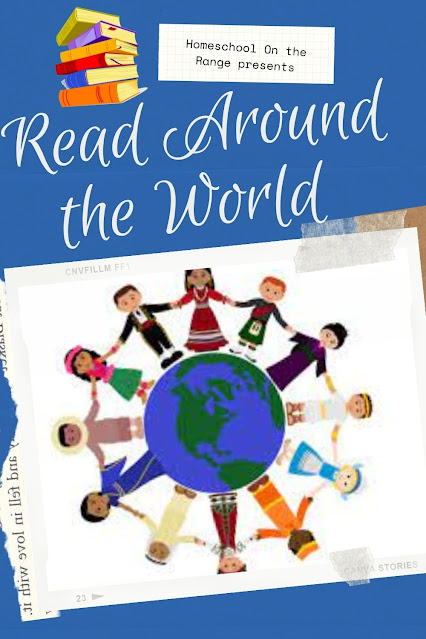
7 Reasons to Read Diverse Children's Books - FREE Read Around the World download

A good, age-appropriate book can help develop empathy and understanding of what it’s like for people who have a different race, culture, religion, or socio-economic status...

Why read diverse children's books?

  1. Develop early relationships.  Reading books about diversity helps children learn to show kindness without judgement, better understand cultural differences, and nurture meaningful relationships in the classroom and on the playground.
  2. Bring current events to life.  Seeing news stories can be jarring for children, especially if they have no frame of reference for that region or culture.  Reading a book can help them develop empathy and better understanding, and it can spark age-appropriate conversations.
  3. See the similarities.  Not every multicultural book spotlights diversity as a different experience.  Sometimes it's about demonstrating a human truth - that we're not as different we think.
  4. Learn a new language.  Granted, you won't become fluent from reading diverse books, but exposing children to other languages at an early age primes those neurons for further linguistic development later on.  Many diverse books are sprinkled with words and phrases from the featured culture.
  5. Explore your roots.  Every family has a unique set of ancestry and heritage, particularly American families, which tend to have many different sets of roots.  Taking the time to further explore those origins can put a personalized spin on learning about other cultures.
  6. Dive into history.  Books set in another country will often have historic information, geographic details, and illustrations or photos.  Learning about these cultures and their history can open new doors and spark even more learning.
  7. Travel the world.  You don't need a passport to explore faraway regions and lands...all you need are the pages of a book.  Good books will have characters that feel so life-like, you can relate to them and learn from their experiences.


What's included in the FREE download?

Read Around the World includes children's literature featuring:

  • Africa
  • Asia
  • Australia / Oceania
  • China / Japan / Korea
  • Southeast Asia
  • Latin America
  • Middle East


Full-Year Diversity Literature Class for Teens

The World Literature course includes:
  • The Boys in the Boat
  • A Long Way Home
  • I Am Malala
  • The Alchemist
  • Balzac and the Little Chinese Seamstress
  • Crime and Punishment
  • Refugee
  • The Book Thief
  • Midnight's Children
  • The Boy Who Harnessed the Wind


Cultural Family-Style Learning


Upper Grades Diversity Units

Wednesday, July 6

9 Tips for Teaching Reading with the TGTB Library


When you have one child reading at the age of four and another who doesn't learn until eight, it can be frustrating and a bit concerning.  But remember - every child learns at his or her own pace.  By being patient, reading regularly as a family, and making it enjoyable, you can help to instill a love of reading and encourage the process!

  1. Talk to your child from birth.  You've probably already been doing this one, but keep it up!  Children are like little sponges - they absorb everything.  (If you don't believe me, curse in front of your child just once.  Just once...and see what happens.)  Use a wide vocabulary, and even different languages, when talking to/with your child...they'll pick up more than you think.
  2. Sing together.  The rhythm and rhyme of children's songs helps to build critical reading skills, such as speech sounds, and clapping or toe-tapping helps to develop syllabic awareness.  TGTB's preschool program includes several learning songs to help develop these skills.
  3. Point out words...everywhere.  Whether it's a poster, chart, app, commercial, or a book, point out words whenever and wherever.  Make a game of it, asking your child what letter a word begins with, or what sound it makes.  Make it fun!
  4. Uppercase letters first.  You know how little b, d, p, and q kind of look the same?  That's confusing to a new reader!  Start with the more distinct upper case letters - B, D, P, Q, etc - and once the reader is comfortable with those, begin making connections between upper and lower case.
  5. Focus on the sound.  When students learn phonics, what they're really learning is how each of the letters sounds.  Teaching the sounds that A, B, C, and D make can be tricky at first, especially with English, which has so many exceptions!  Focus on the hard sounds first, and add in the soft sounds later on.  (For example, /C/ can make the c-sound or the s-sound.)  TGTB's Kindergarten Prep focuses specifically on mastering letter sounds.
  6. Highlight interests.  Whether it's animals, sports, history, or cars...choose books that involve the reader's interest.  This will help motivate them to read and improve those skills.  (This is a good strategy for Hi-Lo readers as well.)
  7. Start in the right spot.  You want stories that aren't too difficult, but that aren't too babyish either.  This is particularly true for late bloomers who have lower reading levels, but higher maturity.  Hi-Lo books (or high interest, low level books) are a good option for this group.  The TGTB Library numbers every book with it's reading level, making it easy for you to choose books and work your way 'up the ladder' as reading skills improve.
  8. Read together.  Don't just snuggle together to read, but actually take turns reading with your child.  This can take a bit of patience, particularly if your child is struggling, but give them that time to sound out words, read with a finger, and develop reading confidence.  Depending on page length, maybe you take the longer-text page and your child takes the shorter-text page.  Reading the same book a few times will help them develop confidence, and once that happens, switch it up!
  9. Understand what you're getting into.  Children need to master five different skills if they are to be successful emerging readers.  These include:
    1. Comprehension - understanding the meaning of the sentences
    2. Fluency - reading aloud with understanding, accuracy, and speed
    3. Phonemic awareness - hearing different sounds in words  
    4. Phonics - understanding the connection between sounds and the letters that represent those sounds
    5. Vocabulary - understanding the meaning of individual words

I have a son with severe speech and hearing issues who is physically unable to master phonemic awareness.  He was 15 before becoming a successful reader.  So if you have a child who struggles, do NOT give up.  Keep plugging away at it, because it will eventually happen...it will just take a bit longer.  Check out some of our favorite early level readers from The Good & the Beautiful Library below...
There is a fabulous and FREE book list available to download for you to get started on the journey to filling your shelves with good books!  They also have a searchable database, where you can filter by reading level, author, and genre.  Many of the books feature parent reviews, as well as commentary about the moral, literary, and educational value.  You do NOT have to use the curriculum to use their book list.  It is just a guide of vetted, 'good' books.  


You may also be interested in....