Click the graphic above to access all our novel studies!!

Thursday, February 29

Exploring the Kindertransport with Max in the House of Spies

Kindertransport, a German term meaning children’s transport, was the informal name of a series of rescue efforts that brought thousands of refugee Jewish Children to Great Britain from Nazi-held lands between 1938 and 1940. After Kristallnacht, an organized massacre of German Jews, the British government eased immigration restrictions to allow children under the age of 17 to enter Great Britain from Germany and German-annexed territories (Austria and Czechoslovakia).  The Kindertransport program was only for children up to the age of 17 because the British government didn’t want lots of adults coming when there was already an unemployment problem in England.

Private citizens or organizations had to guarantee payment for each child's care, education, and eventual emigration from Britain. In return, the British government agreed to allow unaccompanied refugee children to enter the country on temporary travel visas. It was understood that parents or guardians could not accompany the children, but once the war ended, the children would return to their families.  The government didn’t cap the number of children who could come, but also didn’t give any money or support to the program, so the refugee aid charities were only able to bring over as many children as they could make arrangements and raise money for covering.

The last transport from Germany left on September 1, 1939, just as World War II began. The last transport from the Netherlands left for Britain on May 14, 1940, the same day that the Dutch army surrendered to German forces. In all, the rescue operation brought about 9,000–10,000 children from Germany, Austria, Czechoslovakia, and Poland to Great Britain. Some 7,500 of these children were Jewish. Many children from the Kindertransport program became citizens of Great Britain, or emigrated to Israel, the United States, Canada, and Australia. Most of them would never again see their parents, who had been murdered during the Holocaust. 

Similar to the experience of Jews living in Nazi-controlled areas before World War II, refugees today have no choice but to flee their homes when they are threatened by conflict and persecution. They often encounter immense challenges and adversity in their journeys, including exposure to extreme weather conditions, lack of access to proper food, shelter, education, and job opportunities. Because they are forced to confront difficult circumstances and trauma, studying the stories of refugees and genocide survivors can offer students valuable case studies on skills and character traits they can develop for overcoming adversity in their own lives.

You may also be interested in the World War II unit studies and World War II Booklist.

Read

  • Saving Hanno (picture book)
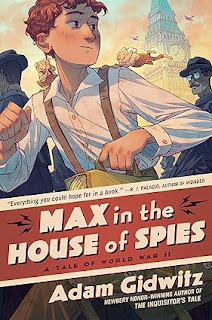
  • Max in the House of Spies (graphic novel)
    • Max Bretzfeld doesn’t want to move to London. Leaving home is hard and Max is alone for the first time in his life. But not for long. Max is surprised to discover that he’s been joined by two unexpected traveling companions, one on each shoulder, a kobold and a dybbuk named Berg and Stein. Germany is becoming more and more dangerous for Jewish families, but Max is determined to find a way back home, and back to his parents. He has a plan to return to Berlin. It merely involves accomplishing the impossible: becoming a British spy.
Watch

Make / Do

  • Using a map, follow the Kindertransport (there were several) from points of origin to destination.
  • Organize a fundraising activity or a donation drive in your community for unwanted clothing and blankets to send to a refugee camp.
  • Decide if the Kindertransport was a success...
  • Light a candle on Holocaust Memorial Day, and learn about the Yom Ha'shoah in this unit study.

Vocabulary

  • Nazis
  • Kindertransport
  • Kristalnacht
  • Anti-Semitism
  • Refugee
  • Persecution
  • Flee
  • Prejudice

Think

  • What do you think it is like for modern-day refugee children who come to our country?
  • How do you think modern experience are the same, or different, from the Kindertransport?


Wednesday, February 21

Roadschool Trip to England - Food, Tips, and Tricks


Food & Drink
  • Splurge on a traditional British tea. You'll be able to check it off your tourist bucket list, and it's quite a bit of fun! If you have money to burn, hit one of the more famous places, but be sure to make reservations. If you're on a budget, many locals hotels (including chains) offer an afternoon tea, too.
  • Visit the local grocery store to save on sandwich supplies and crisps (chips). Pack picnic lunches to take on your outings. This will free up a bit of food money later for an afternoon tea.

English food gets a bad rap, but can actually be really delicious. Here are some must-tries:
  • Full English Breakfast
  • Sunday Roast / Roast Dinner
  • Fish and Chips (preferably by the sea)
  • (Savoury) Pie
  • Sausage Rolls
  • Bangers and Mash
  • Pasty
  • Sticky Toffee Pudding
  • Shepherd's Pie/Cottage pie

Tips & Tricks
  • Deter pickpockets by carrying a crossbody bag. Keep your wallet and phone in the inner pockets.
  • Ask the hotel staff about which areas to avoid after dark, and try not to walk or travel alone. Always listen to your gut instincts!
  • Using public wifi is a great way to save data. Major cities have wifi available everywhere, while more remote destinations may have limited coverage.
  • Talk to the locals about which tours are fantastic and which are overrated.
  • Many of the museums are free, including the Natural History Museum, British Museum, Victoria & Albert, Wallace Collection, and more.
  • For some things, the English use metric measurements, and for other things, they use the imperial system. For example, roads are still measured in the imperial unit of miles, and height is often discussed in feet and inches.
  • Pack as lightly as possible. Condense your clothing and toiletries, bringing multi-purpose items.
  • Roll with it. Expect the unexpected (such as our Wild West / American week experience), and move forward with a "yes, and..." attitude.
  • Have fun!! Ride the hippo. Find the painting that looks exactly like your niece...and text it to her. Walk with the sheep (but not with the bulls). Get off the beaten path. Explore the hidden gems, like an indoor rock garden. Take time to smell the roses.

Must-have items to pack:
  • Rolling Backpack — If you get one thing from this list, make it the suitcase that will change your travel life. It's a rolling suitcase. It's a backpack. It holds much more than you'd expect, and is small enough to be considered a carry-on. Don't check your bags —take them with you. If you end up walking any length with your luggage, you'll thank me.
  • Crossbody bag — Make it more difficult to be targeted by using a crossbody bag as your daily carryall. This one converts into a teeny-tiny pouch that easily fits into your suitcase.
  • Convertible Backpack — Another bag that rolls up into a tiny pouch, this is a lightweight carryon that holds a lot of stuff, with several inner pouches and two water bottle pockets.
  • Plug Adaptor — If you want to charge...anything...you're going to need a plug adaptor. The outlets in the UK are different from the ones in the US, so this is a must.
  • Oregano Oil —These little herbals pack a big punch. Take them at the onset of sniffles, headache, or whatever your first signs of illness happen to be.
  • Headphones — These noise-cancelling headphones take up a bit of space in your carryon, but serve the dual purposes of providing some peace and being more comfortable for inflight entertainment than the airline-provided ones

Basic UK English:
  • the loo or the toilet = bathroom
  • lift = elevator
  • boot (of a car) = trunk
  • queue = line-up
  • pavement = sidewalk
  • petrol = gas
  • football = soccer
  • quid = pound/unit of currency (e.g. 5 quid = 5 pounds)

Pick up activities and worksheets to augment your real or virtual trip in the unit study bundle below!

Explore the art, history, geography, food, and culture of England in this cross-curricular unit study….perfect for families getting ready to travel abroad or folks who want to travel via unit studies!  Each stop along the roadschooling trip covers a different facet of history and culture with unit information, resources, worksheets, activities, and more...  

YES!  I want 122 pages of FUN STUDIES!

Table of Contents:

  • o Introduction & Geography of England
  • o Portsmouth
    • o The Mary Rose & naval archaeology
  • o London
    • o The British Museum & archaeology
    • o The Wallace Collection & medieval history
    • o The Tower of London / London Bridge & the Tudors
    • o Buckingham Palace & royalty
    • o Victoria and Albert Museum & medieval art
    • o Thames / Globe Theater & Shakespeare
    • o Sherlock Holmes Museum & British Literature
    • o Abbey Road & British Invasion
  • o Leeds
    • o Royal Armouries & middle ages
  • o York
    • o Jorvik & Vikings
    • o York Castle & archaeology
  • o Haltwhistle
    • o Hadrian’s Wall & ancient Celts
    • o Vindolanda & archaeology
  • o Alnwick
    • o Alnwick Castle & architecture
    • o Poison Garden & herbs
    • o Barter Books & WW2 history
  • o Alnmouth
    • o North Sea & train history
  • o Newcastle o Segedunum & ancient Romans
  • o Tips & Tricks for Travelling in England

Tuesday, January 30

Roadschool Trip to New Orleans - Exploring Food & Culture!


Nicknamed "The Big Easy," New Orleans (or NOLA) is known for being a cultural gumbo of music, food, history, and architecture. There's so much more to this city than Mardi Gras...and it's a great place for a roadschool trip!

Step Back in Time

New Orleans was founded in 1718 and named for Philippe II, Duke of Orléans. During the American Revolutionary War, New Orleans was an important port for smuggling aid to the American revolutionaries, and transporting military equipment and supplies up the Mississippi River.

Napoleon sold the city to the United States in the Louisiana Purchase in 1803. Thereafter, the city grew rapidly with influxes of Americans, French, Creoles and Africans. Between 1791 and 1810, thousands of St. Dominican refugees from the Haitian Revolution, both whites and free people of color, arrived in New Orleans; a number brought their slaves with them, many of whom were native Africans or of full-blood descent. Louisiana slave culture had its own distinct Afro-Creole society, which included religious beliefs (most notably, Voodoo) and the Louisiana Creole language.

During the final campaign of the War of 1812, the British sent a force of 11,000 in an attempt to capture New Orleans. Despite great challenges, General Andrew Jackson, with support from the U.S. Navy and the pirate Jean Lafitte, decisively defeated the British in the Battle of New Orleans on January 8, 1815.

Pictured above, the Cathedral-Basilica of Saint Louis, King of France in the French Quarter is the oldest cathedral in continuous use in the US, alongside the Royal Presidio Chapel in Monterey, California.

Fast forward to the 21st century, when New Orleans was catastrophically affected when the federal levee system failed during Hurricane Katrina on August 29, 2005. By the time the hurricane approached the city on August 29, 2005, most residents had evacuated. Floodwalls and levees constructed by the United States Army Corps of Engineers failed below design specifications, and 80% of the city flooded.


That NOLA Sound

Through an intertwining of African, Latin, and European cultures, as well as their musical stylings, New Orleans has a unique musical style.  Beginning in the early American days, there was a blending of Latin and African rhythms with European instruments, and the style evolved up to the start of the 20th century, when local musicians such as Louis Armstrong helped to develop something new - jazz!  It continues to evolve today, as we have seen through Zydeco, Delta Blues, and Bounce.  

 
The transformation of nineteen century benevolent associations into more modern social aid and pleasure clubs provided communities with a rich cycle of social events. Their tradition of parading and marching bands continues to embody the spirit of Delta culture. In fact, when a jazz musician dies, fellow players gather to follow a hearse. The procession to the cemetery begins with slow-paced dirges and ends with jubilant music, celebrating the soul's entry into heaven. Mourners and bystanders fall in behind the band, forming a "second line."

Distinctive folk music traditions survive in rural areas of the Delta today. Cajun ballads, some brought from France through Acadia (see The Lookout Tree unit study), are set to an instrumentation of triangle, fiddle, and accordian. Zydeco blends blues and R&B components with traditional Cajun dance music. Saxophones, piano accordians, electric guitars, and corrugated rub-boards (frottoirs) that are worn as vests and scraped as percussion instruments, create the dance music.
Learn more about the evolution of music in The History of Rock and Roll.


Classic NOLA Cuisine

If music is the soul, then food is the heart of the Delta.  Like its music, its cuisine reflects a compled blend of cultural influences.  Trying to label Delta cuisine as French, Spanish, or African is as pointless as trying to label its culture.  A local chef, when asked to describe his cooking style, once said," Perhaps I would classify it as Delta cooking because it is a culinary blend of ingredients that reflects our cultural diversity."

New Orleans is world-famous for its cuisine. The indigenous cuisine is distinctive and influential. New Orleans food combined local Creole, haute Creole and New Orleans French cuisines. Local ingredients, French, Spanish, Italian, African, Native American, Cajun, Chinese, and a hint of Cuban traditions combine to produce a truly unique and easily recognizable New Orleans flavor.

Local specialities include beignets with cafe au lait, po'boys, muffulettas, etouffee, jambalaya, gumbo, red beans and rice, and pralines. Food is so important to the local culture, that there is a saying -- "There are two times of day in Louisiana: meal time and in-between."


Christmas in NOLA

With unique traditions and dazzling decorations, Christmas is a wonderful time to visit New Orleans with the family.  Even the streetcars and steamboats are decked out!  

Some of the holiday highlights include: Candlelight Caroling in Jackson Square (by the cathedral pictured above), building bonfires on the levee to guide Papa Noel, and celebrating with Reveillon dinners.  City restaurants recreate a centuries-old tradition of a Creole four-course holiday feast.
  
If you've ever wanted to peek behind the iron railings and see history upfront, Christmas is also your change to ride the train through the city to experience holiday displays.  You'll see the oldest homes of the French Quarter and Garden District exhibiting the Christmas spirit, with 600-year old trees covered in Spanish moss and dripping in lights.  Many also throw open their doors and invite you inside to experience the holiday beauty.


New Orleans unit study resources

Younger Kids
  • Le Petite Rouge - In this Cajun Little Red Riding hood, when her grand-mère comes down wit' de flu, this Cajun Little Red knows what she has to do.  With her witty cat, TeJean, she sets off in a pirogue to bring Grand-mère some gumbo.
  • All that Jazz! - When kids are finished exploring this book, they can see even more of New Orleans by watching, singing and dancing to the music video that goes with this book on the Bellissimavideo YouTube channel.
  • Boudreaux the Louisiana Mosquiteaux - Swept away by a hurricane shortly after his birth, Boudreaux the mosquito has one biting question that needs to be answered: what are mosquitos supposed to eat? Across the swamps of Louisiana he goes, determined to find a breakfast fit for a pest.
Chapter Books
  • Recipe for Adventure: New OrleansZia's secret ingredient takes Alfie and Emilia to New Orleans. There they meet the members of a kids’ jazz band and are soon helping save the band’s performance venue, as well as tracking down a long-lost cookbook, which just might hold some very special secrets. From beignets and gumbo, to jazz and zydeco, Alfie and Emilia experience everything New Orleans has to offer, all while trying to find their way home.
  • I Survived Hurricane Katrina - The horror of Hurricane Katrina is brought vividly to life in this fictional account of a boy, a dog, and the storm of the century.
Older Chaper Readers
  • They Called Us River Rats - The previously untold story of perhaps the oldest outsider settlement in America, an invisible community on the annually flooded shores of the Mississippi River.
  • RuinedA gripping supernatural mystery and romance set in post-Katrina New Orleans.Rebecca couldn't feel more out of place in New Orleans. She's staying in a creepy house with her aunt, who reads tarot cards. Sweet, mysterious Lisette is eager to show Rebecca the nooks and crannies of New Orleans. There's just one catch, Lisette is a ghost.
Non-Fiction
  • Little Local New Orleans Cookbook - The Little Local New Orleans Cookbook brings the essential flavors of New Orleans to your table.
  • Musical GumboA guide to the music and musicians of New Orleans profiles such legends as Louis Armstrong, Jelly Roll Morton, and Buckwheat Zydeco, as well as modern performers including Harry Connick, Jr. and the Marsalis family.
  • Little Snippets of New OrleansSnippets of New Orleans is a whimsical 248 pages of witty text and wonderful illustrations all about New Orleans: its music, food, architecture, people, eccentricities, and traditions.


Resources for Upper Grades Students


  • Soldiers rounding up terrified civilians, expelling them from their land, burning their homes and crops...  Do you know the history of how the Acadians are similar to Jews?
    • Although they were never actually shipped by the British to Louisiana, many Acadians found their way there due to the attraction of the language and culture – we know it as ‘Cajun.’  In the 1770s, they were allowed to return to Canada, settling in places such as Prince Edward Island,, New Brunswick, and Cape Breton.  The Great Upheaval continued into the 1820s.  They still maintain a strong cultural history and set of traditions today.
    • Pick up the full unit study for The Lookout Tree & the Acadian Exile.
  • How did a French pirate help to defeat the British in the War of 1812?
    • In the early 1800s, Jean and Pierre Lafitte operated a smuggling operation out of Barataria, near New Orleans.  For several years, they made a lot of money through both smuggling and piracy.  In September of 1814, the US Navy invaded their base of operations and captured their fleet.
    • Pick up the full unit study for We Were There with Jean Lafitte at New Orleans.


Resources for Elementary Students


Our first trip to Louisiana was several years ago, when the boys were younger.  You can take the virtual field trip and see many lesser-known locations in this Roadschool Trip to Louisiana.

Following that trip, we put together a guide for studying the cultures of Louisiana, and the history behind them. Includes math, cooking, reading, and worksheets.  This unit also covers the history of Mardi Gras, arts and crafts activities, cooking projects, language arts, and more! It includes several worksheets and a printable book.  Pick up a copy here!

Wednesday, December 27

Word of the Year: Renaissance

Each year, we choose a Word of the Year...something to focus on energies on for the upcoming year.  It's akin to the New Year Resolution, but less of an actual task than a change in mindset.  For 2024, we selected Renaissance...or Awakening, if you will.

Previous words of the year include:

You can visit each of these to pick up resources and ideas for incorporating those principles and goals into your home.


Looking around, something I've noticed since 'rona is a realignment of values and priorities.  People were forced to really take a good, hard look at their lives and reexamine what they wanted.  For folks of a certain age, those mid-lifers, it kicked off a renaissance movement...

Renaissance is a French word meaning “rebirth.”  People tend to think of it as the revival of art and literature under the influence of classical models in the 14th–16th centuries, but it can also be a revival or renewed interest in something.

For homeschooling mamas reaching the end of their journey, having the last child leave, facing an empty nest, and potentially coping with aging parents can all lead to major life changes that leave you wondering exactly what comes next.  Particularly if you've made the decision not to pursue a career and instead dedicated your life to raising babies and setting the stage for them to be successful, what is your purpose now?

This is a prime moment to face rebirth.  Your old life is fading, but your new life isn't born yet.  It's not a midlife crisis, per se, though it might seem like it to those on the outside, but it's a time to examine what the next steps are....

Some of the Precursors to a Rebirth

  • Death of a Loved One
  • Physical Changes
  • Career Setback
  • Family Relationship

Signs of Impending Rebirth

  • Feelings of Nostalgia
  • Emptiness and Boredom
  • Discontentment with Life
  • Drastic Change in Attitude


Your Rebirth Book List


Bring the Renaissance -- the historic version -- into your homeschool with these resources and unit studies!!!


What's your word of the year???

Monday, July 24

Studying Congo with Inoyo of the Congo Forest


Congo-Brazzaville and Congo-Kinshasa...two African countries with a similar history, but a varied future...

The word ‘Congo’ originates from the Bakongo, a Bantu tribe that lives in both countries.  Congo-Kinshasa (also known as the Democratic Republic of Congo) is the third-largest country in Africa, but Congo-Brazzaville (also known as the Republic of Congo) is very small in both size and population.

Both Congo countries are the perfect place for visitors who love outdoor adventures.   There are several hiking trails, national parks, places to boat, and beaches.  In Congo-Brazzaville, most of the population lives in urban areas, but in Congo-Kinshasa, the large majority lives scattered in the rural regions that are lushly covered in tropical forest.  The indigenous peoples of the region largely include the Bantu and Pygmies, with nearly 200 other ethnic tribes comprising the rest.

Congo History

The countries were once ruled by France and Belgium, and French is one of the official languages of the region.  Aside from Rome and the Vatican City, the Congo capitals - Brazzaville and Kinshasa - are the closest capital cities on Earth.  They sit directly across each other on either side of the shared Congo River.  Both countries gained their independence in 1960, and while their cultures are similar, they began to split in similarity at this point.  

They use different currencies and have different governmental systems.  Congo-Kinshasa (orange on the map) was once known as Zaire.  When it became independent from Belgium, Western countries supported General Mobuto Sese Seko as the leader of the free DRC.  Upon his death in 1997, the region was drawn into a series of military conflicts with its neighbors, known as "Africa's World War."
"The abundance of natural resources in the Congo helps fuel the flames of conflict. In a context in which the population is desperately poor and the government fails to provide even basic services, taking up arms seems to some individuals and communities to be the only way to break through the corruption, patrimonialism, and government incompetence that prevents their accessing the benefits of the abundant mineral wealth in their territory. Competition over resources has been a factor driving conflict, and the exploitation of Congo’s resources by groups linked to Rwanda, Uganda, and other outside interests has provided particular motivation for local militia groups to act to secure economic resources for their communities — or at least for themselves."  (~Global Security)

Colonization History

In 1884, the Berlin Conference was a starting point for partitioning the Dark Continent.  During what became known as the "Scramble for Africa," seven European powers divided, invaded, and occupied most of the land over the next 30 thirty years.  At the time, Europe was experiencing a depression.  Africa had an abundance of raw materials, such as oil, ivory, rubber, wood, and gum, that could be used for profit.  Nearly 90% of Africa was under European control by the onset of World War I.

Learn more about the scramble for Africa in our Things Fall Apart unit study, part of the Advanced Literature Studies bundle.

Dangerous Animals of the Congo

  • Hippopotamus may be an herbivore, but can easily kill a person since it is big, aggressive, and quick, both in and out of the water. It is believed that hippos are responsible for hundreds of deaths every year.
  • Nile Crocodile are large, fearsome predators with the occasional penchant to attack humans who accidentally stumble into their territory, and sometimes even grab fishers in their boats.
  • Puff Adder snakes are responsible for more bites than any other snake in Africa. There is always the danger of someone accidentally stepping on them as they lie in the dirt since they are camouflaged and very toxic.
  • Black Mamba is one of the largest and deadliest snakes in all of Africa. The potent mixture of neurotoxins will directly attack the nervous system. The death rate is quite high in untreated cases.

Read
  • Where is the Congo?
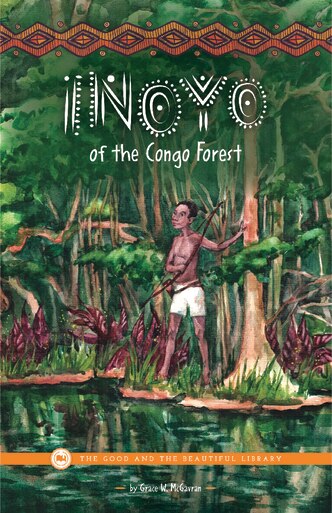
  • Inoyo of the Congo Forest
    • Twelve-year-old Inoyo’s story begins in the dense tangle of the Congo rainforest, where he hunts for food as his father taught him. However, Inoyo has ambitions beyond the jungle—a plan to move to the Christian mission and learn medicine. His father, fearful of breaking tradition and of the tribal medicine man’s disapproval, grudgingly gives his permission. As he works tirelessly to prove his dedication and earn money for his schooling, Inoyo finds himself in a difficult position of choosing to help a friend in need or continuing to pursue his education. Equipped with practical medical knowledge from his time at the hospital and a newfound testimony of Jesus Christ, Inoyo helps to free his family and his village from the shackles of fear and superstition.

Watch
Make / Do
Identify
  • Kinshasa
  • DRC
  • Congo River
  • Zaire
  • Livingstone Falls
  • Brazzaville
  • Mobayi-Mbongo
  • Lake Tumba
  • Lake Mai-Ndombe
  • Katanga
  • bonobo
  • tsetse
  • okapi
  • Lake Tanganyika
Think
  • To what extent did Western influences shape life in the Congo?
  • Why did the witchdoctor in our book vehemently oppose his villagers going to the hospital?