Click the graphic above to access all our novel studies!!

Tuesday, November 3

Pirates of the Outer Banks

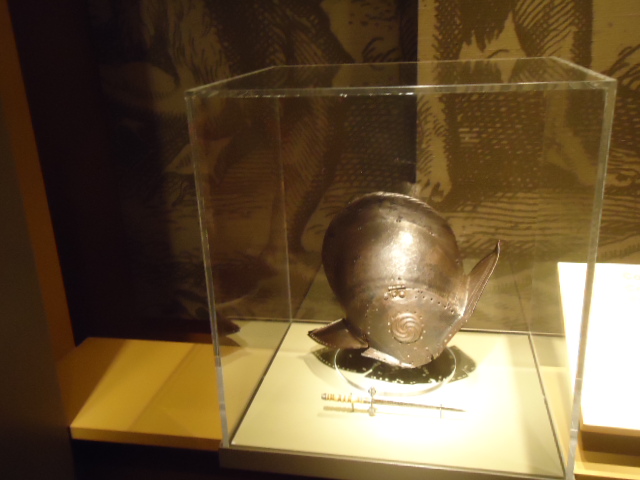
As any #boymom will tell you, the swashbuckling phase can be a lot of fun!  Donning pirate costumes and sword fighting for the glory...or chocolate!  After our stopover on Roanoke Island, we took the opportunity to learn more about Blackbeard and why the area is called the Graveyard of the Atlantic...

More than 2,000 shipwrecks lie off North Carolina’s Outer Banks. A dangerous mix of storms, shoals, and strong currents earn the area the nickname “Graveyard of the Atlantic.”  Stroll along Manteo’s waterfront boardwalks, pass the Marshes Lighthouse, and spend some time at the Roanoke Island Maritime Museum. 

The museum, a free attraction, is a mistake to miss. Friendly staff and vintage boats at the museum educate visitors and locals alike about the craft and history of boat building on Roanoke Island.  Learn more about Blackbeard at Teach's Hole, with The Story of Blackbeard.
So why is it called Graveyard of the Atlantic?
The warm waters of the northbound Gulf Stream meet the cold waters of the Arctic Current off Cape Hatteras at Diamond Shoals, and the entire coast is an area of shifting inlets, bays, and capes, representing a shipping hazard for both coastal and transatlantic vessels.  Because of this, there is an unusually high number of shipwrecks where these currents meet. 
There are hundreds of ships buried in the sands offshore.  They include a fleet of Spanish treasure ships, returning to Europe after successful raids in the Caribbean in 1750 only to encounter a hurricane and end up strewn along the North Carolina coast.  Also, the ironclad Monitor, which sunk off Cape Hatteras while being towed south following her famous battle with the Merrimac. 
This area off North Carolina is not the only deadly coastline. The shores of Sable Island, off Nova Scotia, are so littered with shipwrecks that it has also earned the name "Graveyard of the Atlantic."

Pirates & Graveyard of the Atlantic
Read
Watch
Make / Do

Monday, November 2

Roadschool Trip to the Lost Colony of Roanoke

Most Americans know the story of the “Lost Colony.” The village of Roanoke was the one of the first English colonies to be established on the soil, however this village ended up shrouded in mystery...

We began our study of the Lost Colony at the North Carolina History Museum in Raleigh.  Here, you'll find three floors of artifacts and exhibits spanning from pre-colonization to modern day.  

The Governor of this colony was John White. The small population of Roanoke complained about their lack of food and tools, and they believed that the Native Americans would launch a surprise attack on them. These complaints led to John White going to England, for nearly three years, to later return along with the proper supplies the colonists requested. 

When John White returned, he found a ghost town. The area which was once a village was stripped of its people. Houses and other shelters were nowhere in site. What was left behind were some small cannons, an opened chest, a tall fence built around the perimeter of the former village site, and a single word inscription carved on a fence post, “Croatoan.

Roanoke Island Festival Park

Further down the road, at the Roanoke Island Festival Park in Manteo, we got an intensive history lesson on the area, from the Native Americans to modern times.  We kicked off the day with a little duck-hunting at the boat museum...then stepped 400 years back in time.  At the settlement site, we saw settlers from the Roanoke Voyage of 1585. They show what daily life was like for the soldiers and sailors who traversed the Atlantic Ocean to build a permanent colony for England.
At the settlement site, we saw settlers from the Roanoke Voyage of 1585. They show what daily life was like for the soldiers and sailors who traversed the Atlantic Ocean to build a permanent colony for England.

With guns in hand, we first had to prove that we were friendly, and not here to attack!  Then we were allowed to enter, learn all about blacksmithing, and try our hands at woodworking and pottery making.  The boys spent some time practicing their knot-tying skills before we jumped forward in time.
On the Queen Elizabeth II, we got to help 16th century sailors set the sails, plot a course with an astrolabe, and swab the decks.  A good friend of Sir Francis Drake told us about his life and mission, and we helped some slaves below-decks to lift anchor.
Springing forward just a bit, we came to Indian Town, where the various aspects of native american life pop up along the trail.  You can roast meats, build a wigwam, and do a rain dance.  We learned about the different types of furs, and the advantages of using each, as well as how to plant the Three Sisters successfully!
Before the visit was over, the boys ended up as a promotional feature for Festival Park!!!!!

Thursday, October 29

Staying Occupied in the Wintertime


Our son, Xander, loves the farm life!  I'm sure you'll see him many times over the course of our journey here at Homeschool On the Range.  If you love his work, click on the Xander tag at the bottom of this post to find more!

It is October, and it is raining.  It also got below freezing!  Here are some pictures that I took.  This is one of the coldest Octobers ever in Oklahoma!


Here are some comic strips that I found about eggs...they made me laugh, and I hope they make you laugh, too!  When it's cold outside, I get bored because I like to be outside doing stuff.  So I spent time looking for these to share with you.

I made a rock & roll calendar on Canva.com and included bands like GNR and Ozzy Osbourne...mostly 80s hairbands with an exception of the Eagles and Tedeschi Trucks Band.  Here is a video where I show you my new calendar!  


My hens are now six months old, and they are laying.  I have NINE eggs in this bucket, from tonight.  The eggs are small, but that is because the hens are small and have just started laying.  I bought fifteen Rhode Island Red chicks specifically to be my new egg layers, and now they are finally laying eggs.  It is an exciting day!
I also got a weird egg that doesn't really have a shell on it.  It just has the membrane.  I think this chicken needs more calcium mixed in with her food, but the egg is cool!

Wednesday, October 28

Roadschool Trip to Omaha

Omaha, Nebraska.  Council Bluffs, Iowa.  Two states...basically the same town.  While we usually venture a few hours away from the hotel, this particular trip was plagued by tornadoes, flooding, and other severe weather...

This FREE museum in Council Bluffs, IA was created to educate others about the history, and future, of America's railroad industry.  There are three main sections to the museum : the Lincoln collection, the Transcontinental Railroad, and the history of rail travel.  First, we had to build the railroad.  The boys used dynamite to blow out the side of the mountain and constructed trestle bridges to span the rivers.
There are many hands-on exhibits and virtual experiences so that you can travel on the railroads just like your great-grandparents did!
The Lincoln collection has several pieces from his private life, but the shining exhibit is his personal rail car that was constructed in 1864.  Lincoln only ever rode on this rail car once...to Springfield, IL where he was buried.  It's beautifully macabre...

Finally, part of the history of rail travel is communication.  We learned about the importance of telephones and operators, as well as standard rail time.  The purpose behind introducing railway time was twofold: to overcome the confusion caused by having non-uniform local times in each town and station stops along the expanding railway network, and to reduce the incidence of accidents and near misses, which were becoming more frequent as the number of train journeys increased.

Durham Museum
Across the river in Omaha, NB is the old Union Station.  Maybe you've heard of a 'Union Station' in other cities...what makes something a union station is the fact that it connects multiple railway lines.

Union Station opened in January 1931 and quickly became one of the busiest stations in the nation.  At its heyday, 64 passenger trains and over 10,000 passengers came through the station each day.  The last train ran through there in 1971.

The first things you'll notice when you walk inside are the eye-popping ceiling and the bronze statues.  It is the statues that make the place feel 'alive,' like you are re-living the golden age of railroad history in the 1940's.  Actually, the whole museum has that vibe about it...
Take the escalator downstairs to ride the trolley through town and take the train across country!  On your trip, you'll pass vintage cars and beautiful scenery.  If you're an HO train lover, there is a track setup that spans over half the length of the museum - it covers the evolution of the Union Pacific railroad, from laying the track, through its peak, and to its position today.
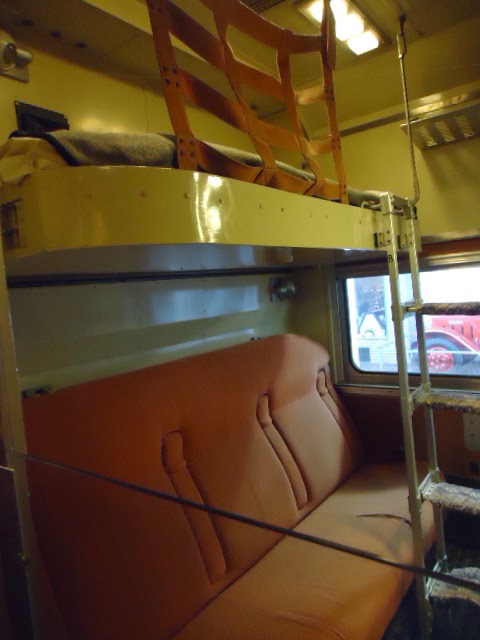
Inside the train itself, you can easily imagine what it would have been like to travel across country.  The lounge and dining cars are reminiscent of White Christmas, but the berth cars are different.  Our guide told us that there were two types of berths :  one had separate bedrooms, while the other was a living room that folded out into a bedroom.  These were the latter type.  Honestly, I think I'd prefer the former!  Six families slept on one rail car in little bunkbeds...with very little space to move.  If you were travelling alone, you had an actual room, but the bed folded down on top of the toilet, and if you had to go in the night, you had to unhitch your bed first!
There are many historical exhibits on the other side of the museum about the history of Omaha.  One of our favorites was the dress-up area....it's fun to be silly!
We arrived early, and decided to do a bit of exploring.  Dad is a member of the Scottish Rite, so we popped into the local temple to have a look around and do a bit of socializing.  It gave everyone a chance to stretch their legs.  If you've never been to a Masonic Temple, I suggest doing so for the history and architecture alone.  The oldest was having a grand time exploring various architectural features of the building, while the youngest pored through antique books in the library.  

Don't be put off by all the hype surround freemasonry.  As the hubby says, "Coca-cola has more secrets than the freemasons."
Orchard & Winery
Finally, the rain let up for a bit, so we stopped off at a local place called Ditmar's Orchard.  We weren't sure what to expect, but it was the perfect ending to the day!  The lady that owns it was the embodiment of a working mother...juggling several kids effortlessly while running the orchard and winery.  That's right - winery.  Hot dog for mom and dad!  

The orchard has a large playground - that's fun even when it's wet - and so we sent the kids off to play with the other kids that were out there.  It's nice to watch them making friends wherever we go.  We sampled wine & cheese and toured the orchard.  In the fall, they have a U-Pick for families to pick their own produce.  They also have a lot of locally-made products (jams, jellies, mixes, etc) that are preservative free and very yummy!  If you're going to be in the area, we recommend stopping in here!


Railroads, Iowa & Nebraska Resources